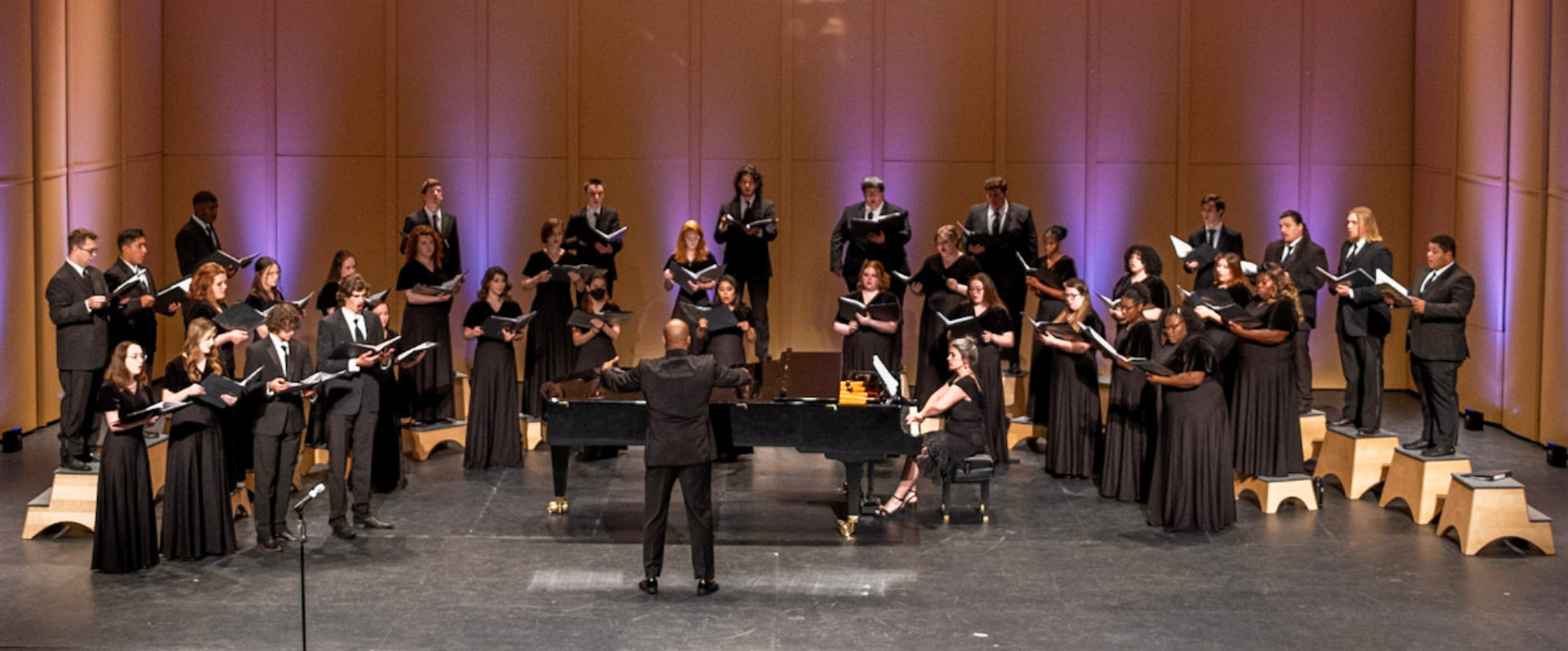
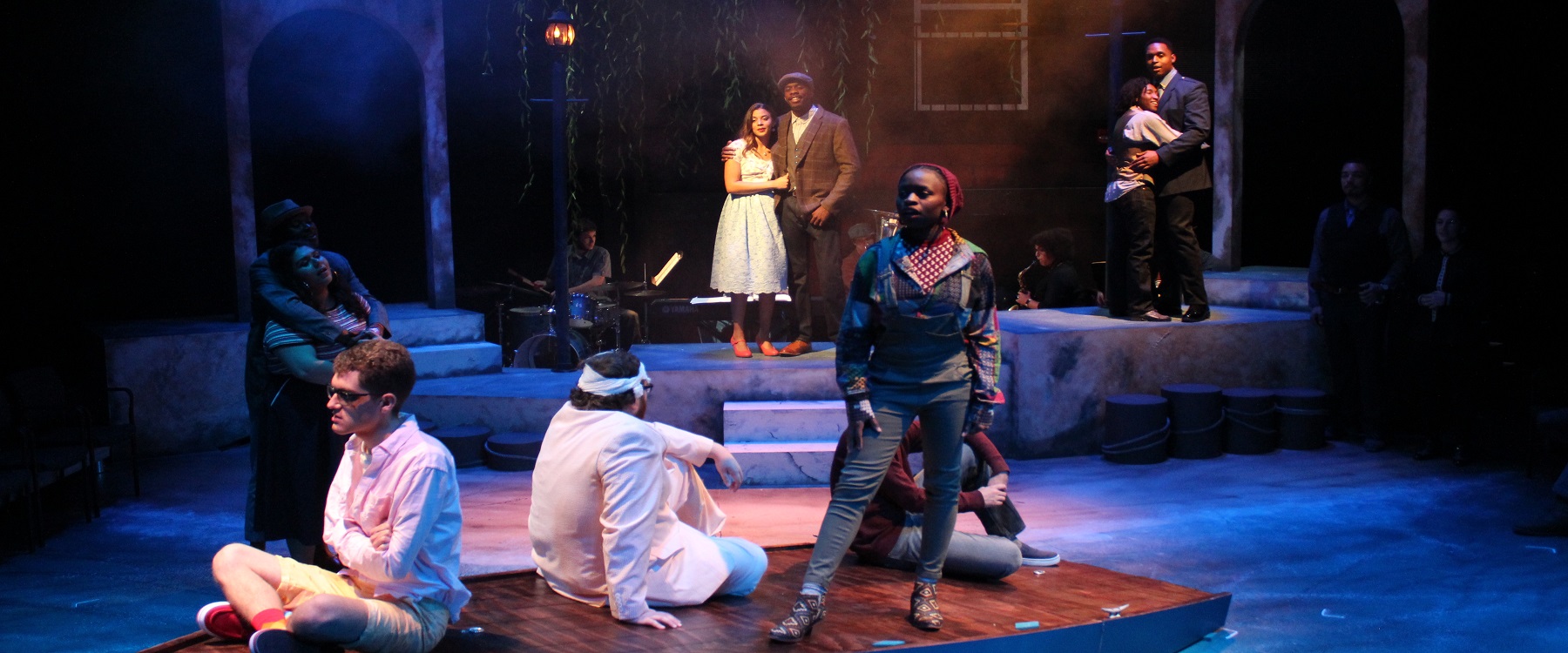
The Department of Music, in collaboration with the College of Architecture at UNC Charlotte, staged a production of Les Arts Florissants during the final weekend of January, 2008.
Written by 17th century French composer Marc-Antoine Charpentier, Les Arts Florissants is the second production overseen by Dr. Anne Harley, director of the Opera Program at UNCC, following last year’s staging of Henry Purcell’s Dido and Aeneas.
As with Dido, Harley’s vision for Les Arts has involved a thorough re-examination of the traditional tenets of staging opera, which in many ways remains the most conservative genre of the performing arts. In both productions, Harley has fused the dramatic action of the existing libretto with additional texts, extending the range and scope of the original works.
In the case of Dido and Aeneas, the text of Purcell’s opera was interwoven with passages from Christopher Marlowe’s play, Dido Queen of Carthage.
The supplemental spoken dialogue provided narrative background for a
contemporary audience potentially unfamiliar with the legend of Dido
and Aeneas, the star-crossed lovers from Virgil’s Aeneid. Additionally,
the pairing of speaking and singing versions of lead characters
provided director Harley with a compelling spectacle: that of paired
performers, portraying dual facets of the principals, alternating
between the oratorical and the lyrical.
With Les Arts, Harley punctuates the narrative arc of the libretto with a scene of farcical comedy from the final work of Moliere, a contemporary and collaborator of Charpentier. In doing so, Harley transforms what might otherwise be dismissed as a quaint paean to the reign of Louis XIV into a vital discourse on war and peace in our time. The narrative rupture brought about by this insertion is more akin to the modernist theatrical practices of Brecht, Weiss and Artaud than the staid orthodoxies that continue to dominate contemporary productions of traditional opera.
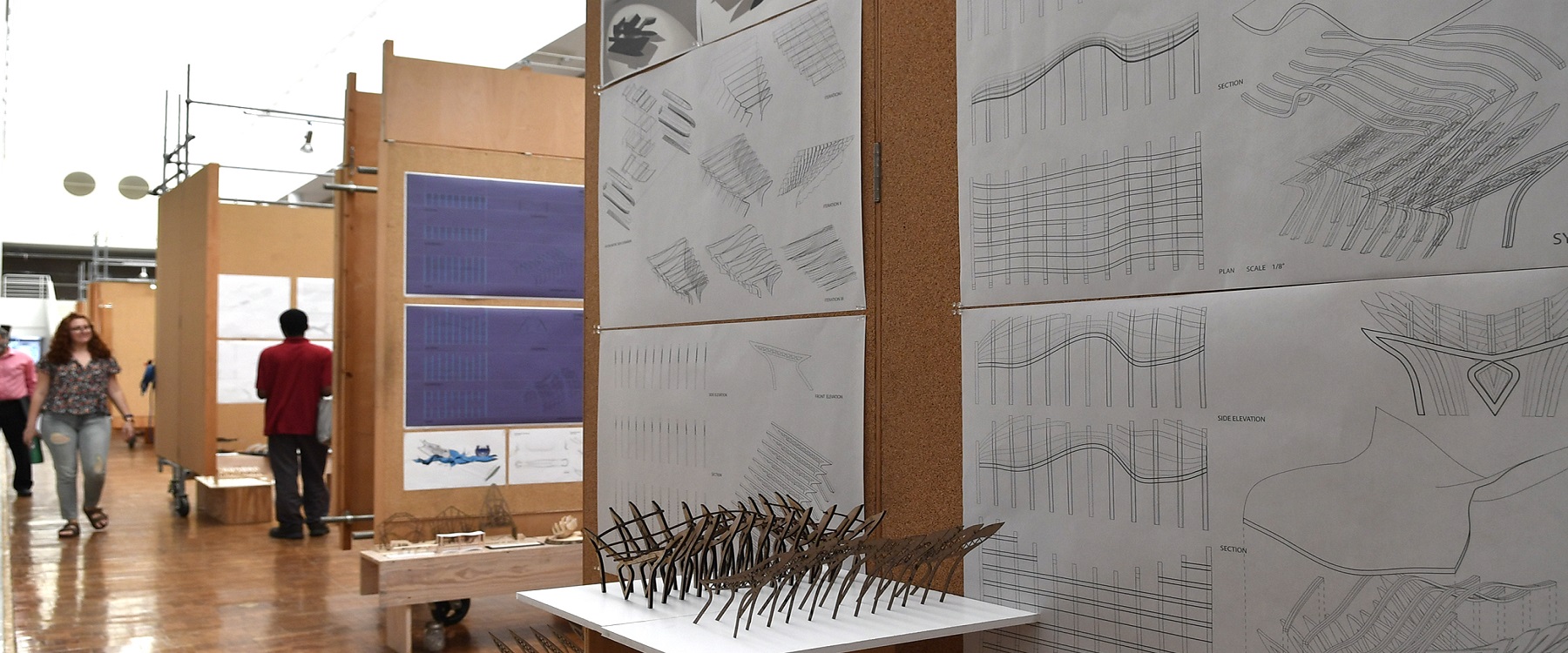
Perhaps even more striking than these textual innovations was the
production design for these operas, the creation of a team of
collaborators from the College of Architecture. Under the auspices of
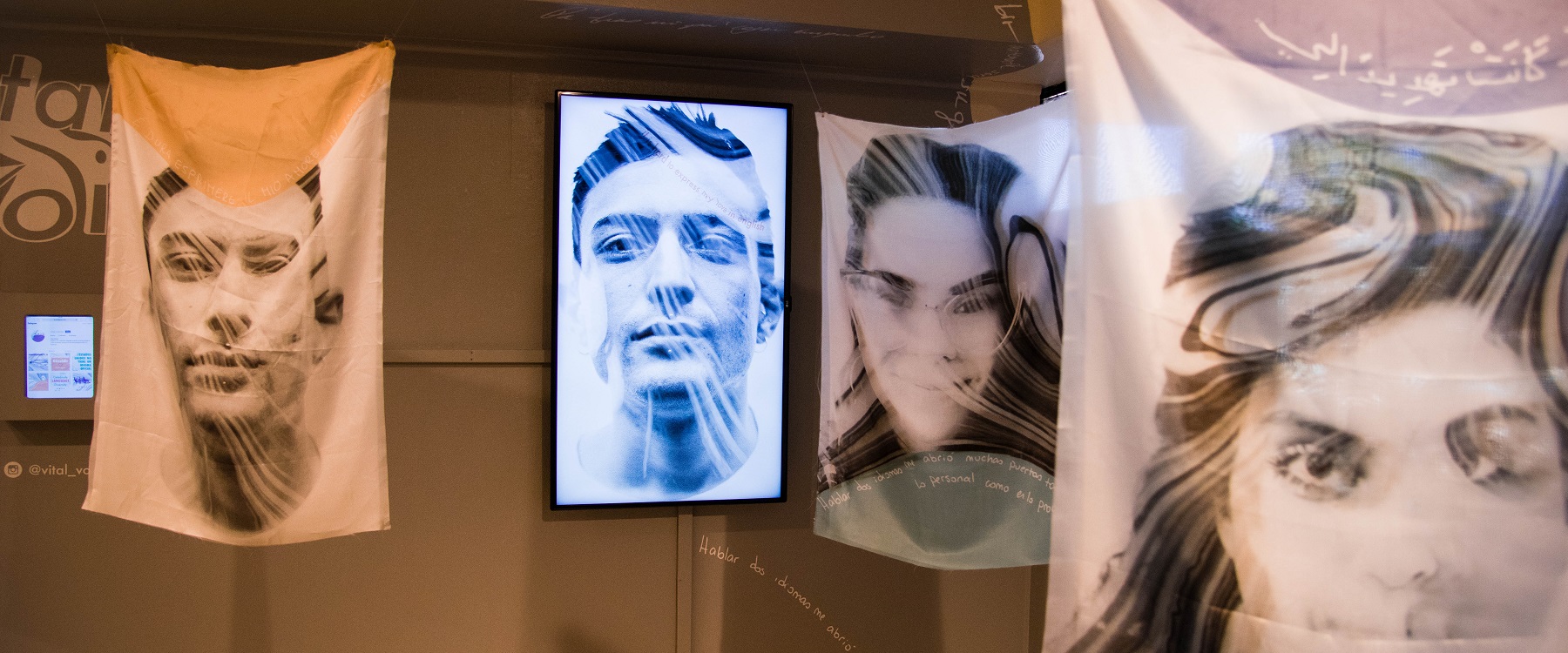
the CoA’s Digital Design Center, faculty and students have integrated
interactive technologies to both support and enhance the essential
‘liveness’ of stage performance. Utilizing a range of digital tools,
including motion-capture technologies, visually interactive software,
and computer-aided fabrication, the design team has endeavored to
re-imagine the parameters of live performance with the use of emerging
interactive technologies.
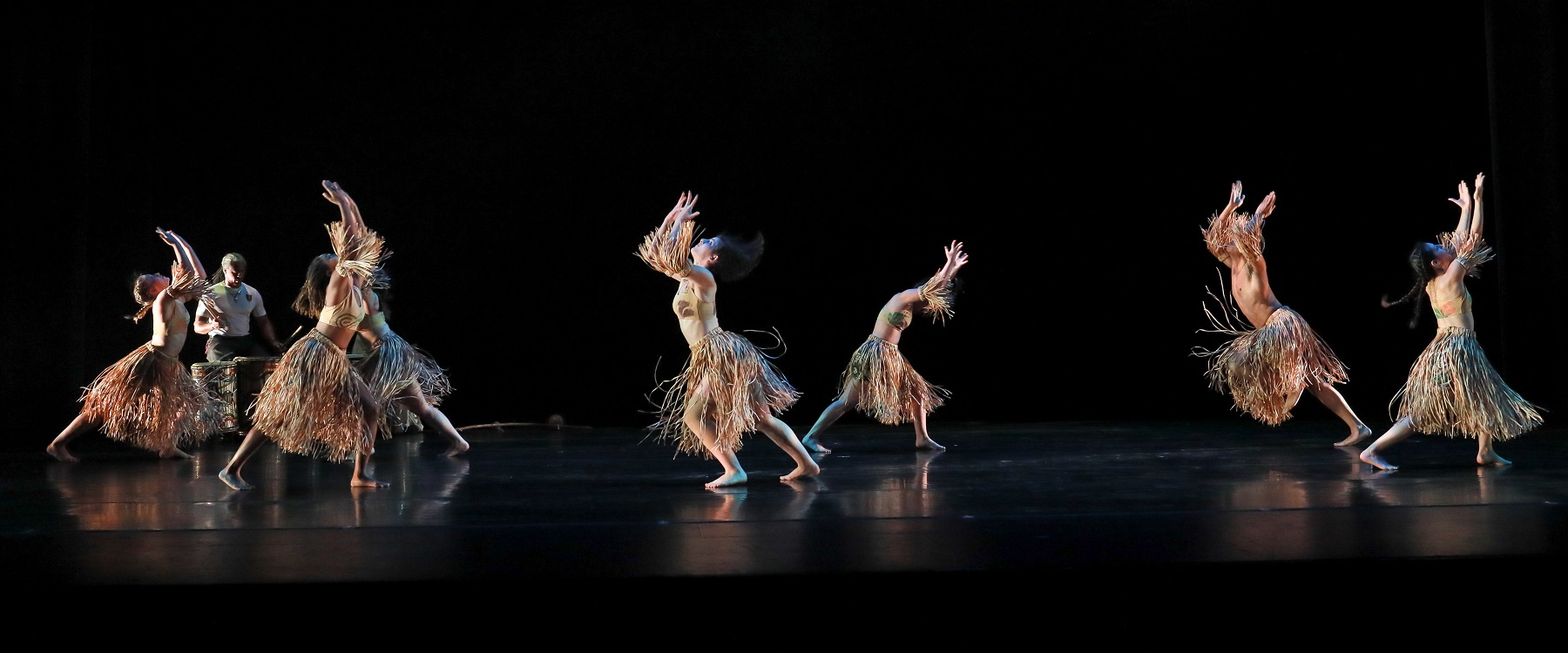
The Department of Music, the Department of Art and Art History, the Department of Dance and Theater, and the College of Architecture collaborated on the production. Dancers were used during the performances, and the art department assisted in costume design and production. This series of partnerships is the first to be engendered by the newly emergent College of Arts and Architecture, a result of a merger between the College of Architecture and the Departments of Theater and Dance, Music, and Art and Art History at UNC Charlotte. One of the principal missions of the newly created College of Arts and Architecture will be to expand upon its already significant presence within the Arts and Design communities of Charlotte and the Carolinas.
As part of this mission, the Opera Program not only works toward a major production every year, but stages an ambitious schedule of Outreach performances held throughout the region. This past year, the Opera for All program performed in eight schools throughout the Charlotte area, exposing thousands of students to opera for the first time. These performances have been met with great enthusiasm on the part of the audience, and future expansion of Opera for All is planned in the coming months to include visits to senior living centers and correctional facilities.
Les Arts Florissants was performed on the evenings of Jan 31, Feb. 1 and 2 at the Belk Theater on the campus of UNC Charlotte.
For further information, please contact Dr. Anne Harley, Department of Music:
, or Professor Eric Sauda, College of Architecture:
From Wikipedia:
The story of [Les Arts Florissants]
concerns the eponymous Arts, shown flourishing under the beneficent and
peaceful reign of Louis XIV, as they and a group of Warriors become
drawn into a dispute between the central characters of La paix (Peace)
and La discorde (Discord). After a brief struggle in which Discord and
his Furies gain the upper hand, Peace appeals to Jupiter to intervene
on her behalf. Discord and his followers are chased back into Hell by a
hail of thunderbolts, and Peace holds sway once more.