

|
Are we a part of or apart from nature? It is this seemingly simple query that drives the artistic project entitled Force of Nature, a title which has been brewing for the past three years but has become particularly poignant in the wake of two exceptionally brutal years of natural disasters. Recent events have turned what was a simple but loaded question about our relationship with nature into a current events debate, and this debate is a global one in which the public has become passionately involved and about which they have become legitimately concerned and perhaps a little confused. But beware—there is no promise of an answer to this difficult question at the end of this project. Explorations such as these do not provide such gratification. Instead, Force of Nature offers an alternative mode of articulating our relationship to nature so that we might better understand why the initial question is worth asking. Force of Nature is a frame through which our world might be experienced and understood. The frame is international in its reach but local in its strategy. Ten Japanese artists have arrived in the Carolinas for six intensive, art-driven weeks during which time their interaction with city, town, and campus communities will cause physical transformations, some more evident, others more ephemeral. UNC Charlotte will be reworked in a very visible and provocative fashion as Ayako Aramaki takes up residency in her temporary studios on the lawns around campus, and, inside the Storrs Gallery in the College of Architecture, Akira Higashi will be working with locally obtained, natural materials of his own choosing as he creates mini-environments that speak as much to the persistent human need for shelter as they express ancient technologies of construction. As a college full of people who examine and seek innovative strategies of mediating between human beings and the world, the CoA at UNC Charlotte believes that architecture has much to gain from the work that Ayako and Akira will be doing in its midst. With green building on the rise and sustainability—the new catch-all phrase for environmentally conscious design—resonating in the halls of architecture schools worldwide, a renewed awareness and concern for the natural environment has penetrated the core of architectural education. However, it would be to the detriment of architecture to see this turning toward nature as little more than a scientific project. It is the creative impetus of design that makes architecture something more than the sum of its building systems and structural components, and it is this creative moment, this architectural leap of faith, that fuels and is fueled by the artistic project that is Force of Nature.
|
|
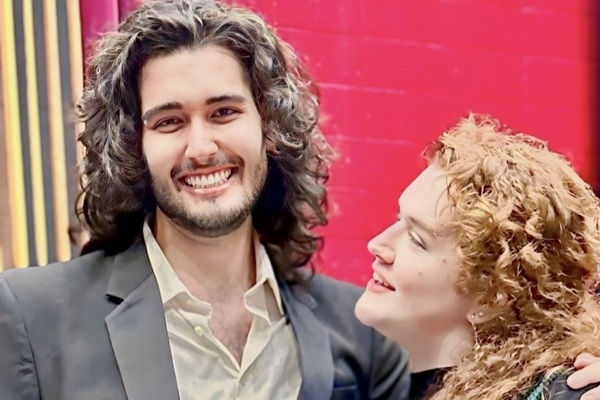
The push and pull between East and West, tradition and novelty, nostalgia and the chaos of the present: these represent modes of the (re)cycling by which Ayako Aramaki is so intrigued and which serves as inspiration for her art. Longing for something that was or is with the knowledge that it must be relinquished in the end serves as the basis for a series of works that will touch down for a mere moment in some particular form on our campus before cycling back into the earth. The power of this art that lies somewhere between performance, earthwork, and sculpture lies in our ability to incorporate what will exist for these few weeks into our own collective memory as a community and as temporary residents in this place where we are still deciding if we are a part of or apart from nature. If nothing else, perhaps this art forces us to realize that the question will eventually be answered for us. |
|
Read more...
|
|
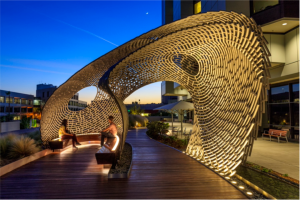
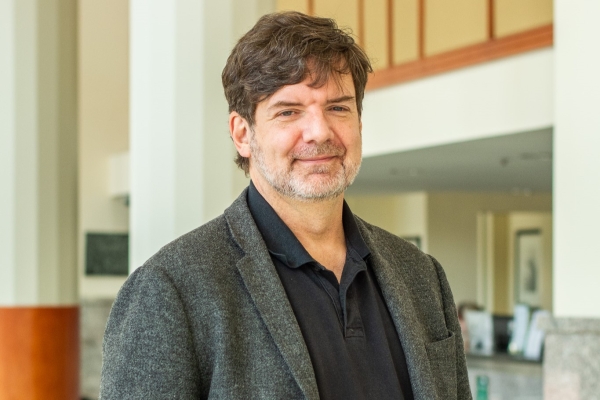
Akira Higashi is an artist by trade, but he is an architect in the minds of those who engage in his art. Akira’s art is made to be inhabited, sometimes by more than one person at a time, but it is the material aspect of his work that these shifting relationships between people, art (and architecture), and place becomes clear. Clay, wood, straw…these materials evoke images of traditional building techniques in Japan and North Carolina alike and force us to reconsider the ease of detaching the current technologies of our built environment from the so-called primitive technologies from which they were derived. These and similar questions are at the center of Akira’s practice whereby he seeks to engage individuals in the thought project that drives Force of Nature as well, namely the “relationship between the ways we live and the world we live in.” |
|
Read more...
|
|
|